
By Dr. Tagai, Hawaii Premier Dermatology
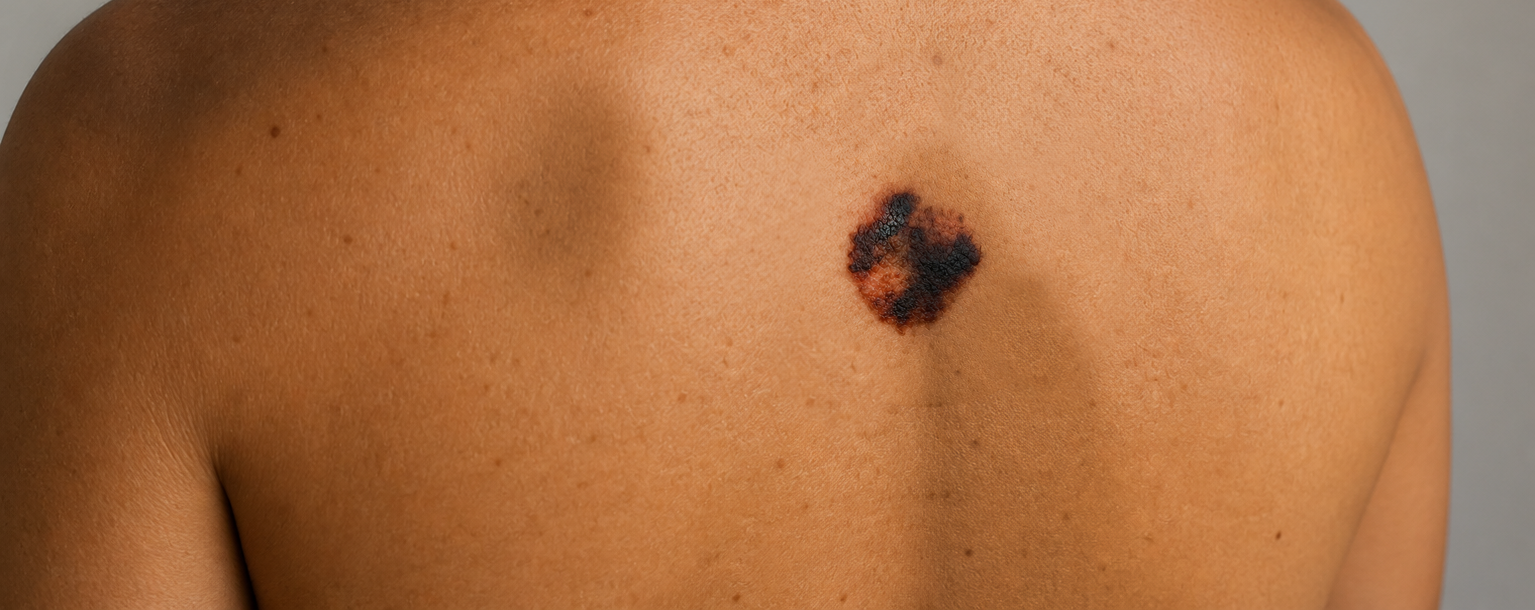
Living in Hawaii means soaking up sunshine almost every single day — and for most of us, that’s one of the greatest gifts of island life. Whether you’re hiking the Koʻolau Range, paddling out at Waikiki, or simply enjoying lunch outside, your skin is absorbing UV rays year-round in ways that residents of most other states never experience. But that beautiful, constant sun comes with a real responsibility: protecting your skin from melanoma, the deadliest form of skin cancer.
May is Melanoma Awareness Month — and there’s no better time to learn the warning signs, perform a skin self-exam, and schedule a professional screening with a Hawaii dermatologist. At Hawaii Premier Dermatology, we see firsthand how critical early detection is for our patients in Honolulu and across the islands.
What Is Melanoma?
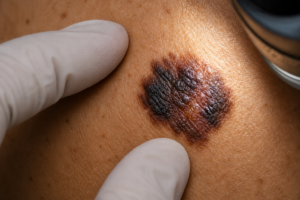
Melanoma is a type of skin cancer that develops in the melanocytes — the cells responsible for giving your skin its pigment. While it accounts for only about 1% of all skin cancers, melanoma is far more dangerous because of its ability to spread to other organs if not caught early. According to the American Cancer Society, approximately 105,000 new cases of invasive melanoma and over 107,000 cases of melanoma in situ (an early, non-invasive form) are expected to be diagnosed in the U.S. each year — more than 210,000 new melanoma diagnoses combined.
Hawaii carries a particularly high risk for sun-related skin damage. Research published in the International Journal of Cancer found that among non-Hispanic White residents, Hawaii has the highest rate of UV-attributable melanoma in the nation — 65 cases per 100,000 people — and that 97% of melanoma cases in this population are linked to UV radiation exposure. While melanoma is less common in people with darker skin tones, it can still occur and is often diagnosed at a later stage, making awareness important for everyone. Living here means sun protection and regular skin screenings aren’t optional — they’re essential.
The ABCDEs of Melanoma: What to Look For
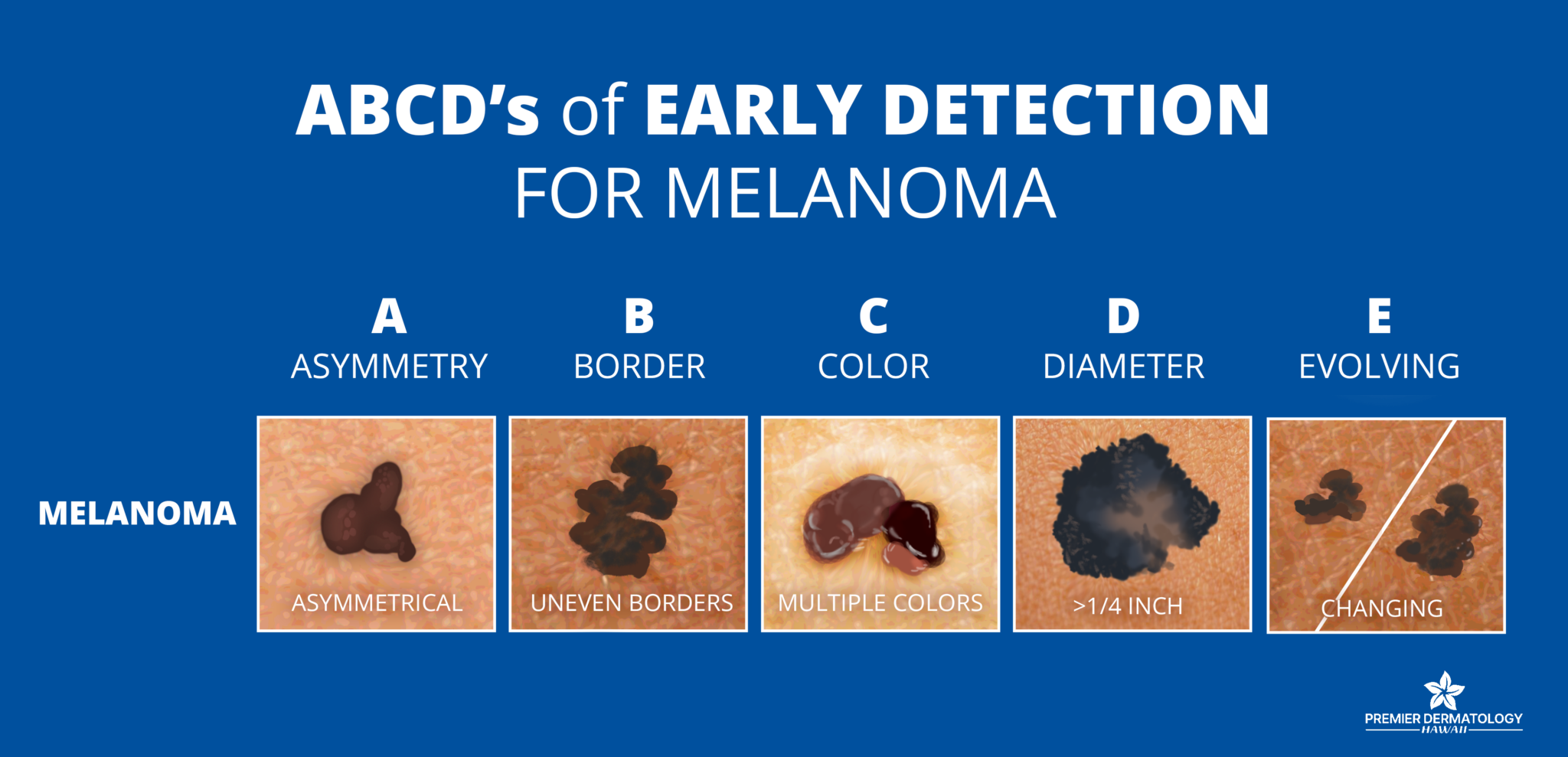
Dermatologists use the ABCDE method to help patients identify suspicious moles or skin lesions during monthly self-exams. Get to know your skin — from your scalp to the soles of your feet — and watch for these warning signs:
A – Asymmetry: One half of the mole doesn’t match the other. Symmetrical moles are generally less concerning.
B – Border: Edges that are irregular, ragged, notched, or blurred — rather than smooth and well-defined.
C – Color: Uneven coloring or multiple shades within a single spot — such as brown, black, pink, red, white, or blue.
D – Diameter: Larger than 6mm — roughly the size of a pencil eraser — though melanomas can be detected at smaller sizes.
E – Evolving: Any change in size, shape, color, or new symptoms like itching, bleeding, or crusting. This is often the most important sign.
Remember: melanoma can develop anywhere on the body, including areas that rarely see the sun — and even under fingernails and toenails. About 30% of melanomas develop from existing moles, so it’s important to monitor the ones you already have. Perform a head-to-toe self-exam monthly, and document anything suspicious with photos so you can track changes over time.
When to See a Dermatologist for a Skin Cancer Screening
Self-exams are a powerful first line of defense, but they are not a substitute for a professional skin evaluation. The American Academy of Dermatology recommends regular skin self-exams, especially for individuals at higher risk — including those with fair skin, red or blond hair, light eyes, or males over 50. Many dermatologists recommend annual full-body skin exams, particularly for patients with one or more risk factors. Schedule an appointment with our Honolulu dermatology team if:
– You notice a mole or spot that meets one or more of the ABCDE criteria above.
– You have a personal or family history of melanoma or other skin cancers.
– You have fair skin, light eyes, or a history of frequent sunburns, especially in Hawaii’s high-UV environment.
– You have a large number of moles (more than 50), or atypical (dysplastic) moles.
– You have a history of significant outdoor UV exposure — surfing, hiking, or working outside — without consistent sun protection.
– It’s been more than a year since your last professional full-body skin exam.
The five-year survival rate for melanoma is nearly 99% when detected at its earliest, localized stage. That number drops dramatically as the disease advances — for example, the five-year survival rate for metastatic melanoma is approximately 35%. Early detection, quite literally, saves lives.
Protecting Your Skin Year-Round in Hawaii
While screening is critical, prevention matters just as much. Living on the islands means navigating some of the most intense UV exposure in the country. A few key habits can significantly reduce your risk:
– Wear broad-spectrum, reef-safe SPF 30+ sunscreen daily. Hawaii law restricts certain chemical sunscreen ingredients to protect coral reefs, so choose reef-safe formulas.
– Seek shade during peak UV hours (10 a.m. – 4 p.m.), especially at the beach or on open trails.
– Wear protective clothing and a wide-brimmed hat when spending extended time outdoors.
– Never use tanning beds. Indoor tanning increases melanoma risk — studies show a 20% increased risk of melanoma with any history of tanning bed use, with even higher risk when use begins before age 35.
Your Next Step: Schedule a Skin Cancer Screening in Honolulu
At Hawaii Premier Dermatology, our board-certified dermatologists understand the unique skin health challenges that come with island living. From the year-round UV intensity to the active, outdoor lifestyle we all love, we’re here to help you protect your skin at every stage of life. Whether you’ve never had a professional skin exam or it’s simply been a while, Melanoma Awareness Month is the perfect moment to make your health a priority.
Schedule your melanoma screening appointment today at Hawaii Premier Dermatology — expert skin cancer detection and compassionate care right here in Honolulu, Hawaii.