
Act Before It Spreads:
Squamous Cell Carcinoma Diagnosis & Treatment in Honolulu
Squamous cell carcinoma is the second most common skin cancer — and in Hawaii’s high-UV environment, it’s one we see regularly. Our board-certified experts in Honolulu diagnose and treat SCC with urgency and precision, giving you the best possible outcome at every stage.



Act Before It Spreads:
Squamous Cell Carcinoma Diagnosis & Treatment in Honolulu
Squamous cell carcinoma is the second most common skin cancer — and in Hawaii’s high-UV environment, it’s one we see regularly. Our board-certified experts in Honolulu diagnose and treat SCC with urgency and precision, giving you the best possible outcome at every stage.
What Is Squamous Cell Carcinoma?
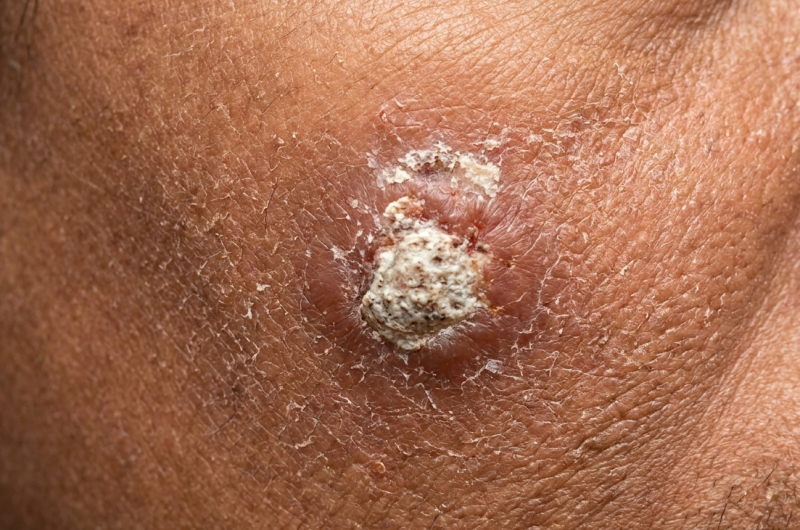
Squamous cell carcinoma (SCC) is a malignant tumor arising from the keratinocytes of the skin’s outer layer. Unlike basal cell carcinoma, SCC carries a meaningful risk of spreading to lymph nodes and distant organs if not treated promptly — making early detection critical.
UV-Induced SCC
The most common form — driven by cumulative UV damage to skin cell DNA, most often appearing on chronically sun-exposed areas like the face, ears, scalp, neck, and backs of the hands. Hawaii’s year-round sun makes this the predominant SCC type we treat.
Arising from Actinic Keratoses
Untreated actinic keratoses — pre-cancerous sun-damage lesions — can progress into invasive SCC over time. Treating AKs promptly is the most effective way to prevent this progression before it starts.
Immunosuppression
& Chronic Skin Injury
A weakened immune system—from organ transplant, HIV, or certain medications — dramatically increases SCC risk. Chronic wounds, burn scars, and longstanding inflammatory skin conditions can also undergo malignant transformation over time.
The staff was pleasant, the wait was short, and the diagnosis and treatment was very straightforward. Dr. Musaev has excellent knowledge and explained things well. The procedure was quick and painless. Clinic location and parking was easy. A great community resource!

Yoichi Soma
Great experience at Hawaii Premier Dermatology! This was my first derm appointment and I am very happy I chose to come here. Justin was very knowledgeable and helpful and I even got something else checked that I didn’t originally plan on getting checked. I’ll be coming here from now on and I highly recommend!

Rhema Wong
Justin Maio and staff were super friendly. I was actually a bit late to my appointment but was still accommodated. Great experience.

Kim Nicely
Wonderful, respectful, easy to schedule, easy to check in. Doctor was prompt and thorough and kind. He spent as much time as needed with me. Definitely recommend Hawaii Premier Derm, thanks y’all!

Colby Kohler
Dr Tagai and his assistants were detailed and quick in my recent visit. They helped me navigate many paths forward for me to choose from based on my skin condition. Thanks!

Sumsum Smead
Very fast and professional. I was nervous at first as it was my first doctor appointment ever since I’ve moved here but everyone was very friendly and I felt so welcomed there . Thank you Dr. Tagai, Grace and the front staff .💕

Tiffany Ide
Justin Maio is #AMAZING. Such a wonderful person with a great personality, and he always puts you at ease–even when it can be scary getting biopsies! I would travel 50 miles anywhere on this island just to see him–and I already go 22! Best office with the nicest and most professional staff. I truly cannot say enough positive things–No joke!

Kathy Coryea
Had a worry about a skin cancer spot and was relieved when Dr. Tagai had a spot for me that week. He had excellent bedside manner and was compassionate when I was a bit of a wimp (okay, a big wimp) with the needle. Highly recommend him.

Cherie Y
After two years of wondering and self treating and many healthcare visits to the cheap clinics and constant AI asks, I paid out of pocket less than $400 for 2 visits to find out I have a rare skin condition called Actinic Dermatitis. Thank you Justin, now I know and now I can sleep well at night and understand what is NOT causing this. I really appreciate your expertise!

Tim Swartz
Wonderful experience! The staff was professional, kind, and attentive. Justin was very friendly, knowledgeable, and made me feel comfortable throughout the visit. Highly recommend this clinic!

Olena Mazur

Precision Diagnosis
Every suspicious lesion is evaluated with urgency — SCC’s behavior at diagnosis directly determines treatment options and long-term prognosis.
- Clinical Examination & Dermoscopy
We assess lesion morphology, borders, and surface features, using dermoscopy to identify characteristics that distinguish SCC from benign keratoses and other growths.
- Skin Biopsy
A biopsy provides definitive histopathologic diagnosis, including differentiation grade and depth of invasion — both critical for staging and treatment planning.
- Skin Cancer Screening/Total Body Skin Exam
A history of squamous cell carcinoma increases your risk of developing new skin cancers, making regular total body skin exams essential. This thorough head-to-toe examination catches new or changing spots at their earliest, most treatable stage.
Advanced Treatment Pathways
- Surgical Removal: Most squamous cell carcinomas are treated with in-office surgical excision, which removes the cancer along with a small margin of healthy skin to ensure complete clearance.
- Specialized Excision Techniques: For lesions on the face or other sensitive areas, tissue-sparing approaches offer high cure rates while preserving as much healthy skin as possible.
- Non-Surgical Options: Select superficial cases may be treated with topical therapies or other non-invasive approaches, depending on the size and depth of the lesion.
- Ongoing Surveillance: After treatment, regular total body skin exams help catch any new or recurring skin cancers at their earliest, most treatable stage.

The Hawaii Premier Difference
- Board-Certified Experts
- Evidence-Based Treatments
- Compassionate Approach
Take the First Step
Choose how you'd like to connect with us:
If you have a rough, scaly, or non-healing lesion — or a spot that’s changing or bleeding — don’t wait. Our Honolulu experts will evaluate it promptly and give you a clear path forward.
Other Ways to Reach Us:
- 1600 Kapiolani Boulevard Ste 508, Honolulu, HI, 96814
- Phone: (808) 400-6904
- Email: info@hawaiipremierderm.com
Send us a message or consultation request
Ready to book directly?
Book your in-person consultation in Honolulu to get your personalized treatment roadmap.